A Field Guide to
AI Literacy
How to stay oriented in a world mediated by AI

Why this guide exists
AI is now woven into how we:
read news | search for information | make decisions | create content | see one another
Most of us are being taught how to use AI.
Very few of us are being taught how to read it.
This guide is not about prompts or features.
It’s about keeping human judgment intact.
AI literacy is the ability to tell the difference between a tool, how it is used and the system rewarding that use.
If you can hold that distinction, you are far less likely to be misled, manipulated or numbed.

1. Output literacy
Ask: What am I actually looking at?
Not all AI involvement is the same.
Get used to asking:
Is this AI-generated, AI-assisted, summarised or translated?
Is it original thinking or recombination?
Does it sound confident without being specific?
⚠️ Warning sign:
Vague authority, smooth certainty, no sources.
This is the AI-era version of “don’t believe everything you read”.

2. Provenance literacy
Ask: Where did this come from and why does it exist?
Before reacting, ask:
Who prompted this?
Who published it?
Who benefits if it spreads?
What platform amplified it?
Most low-quality AI content is not created accidentally.
It is incentivised.
If you don’t know the context, you don’t yet know what you’re reading.
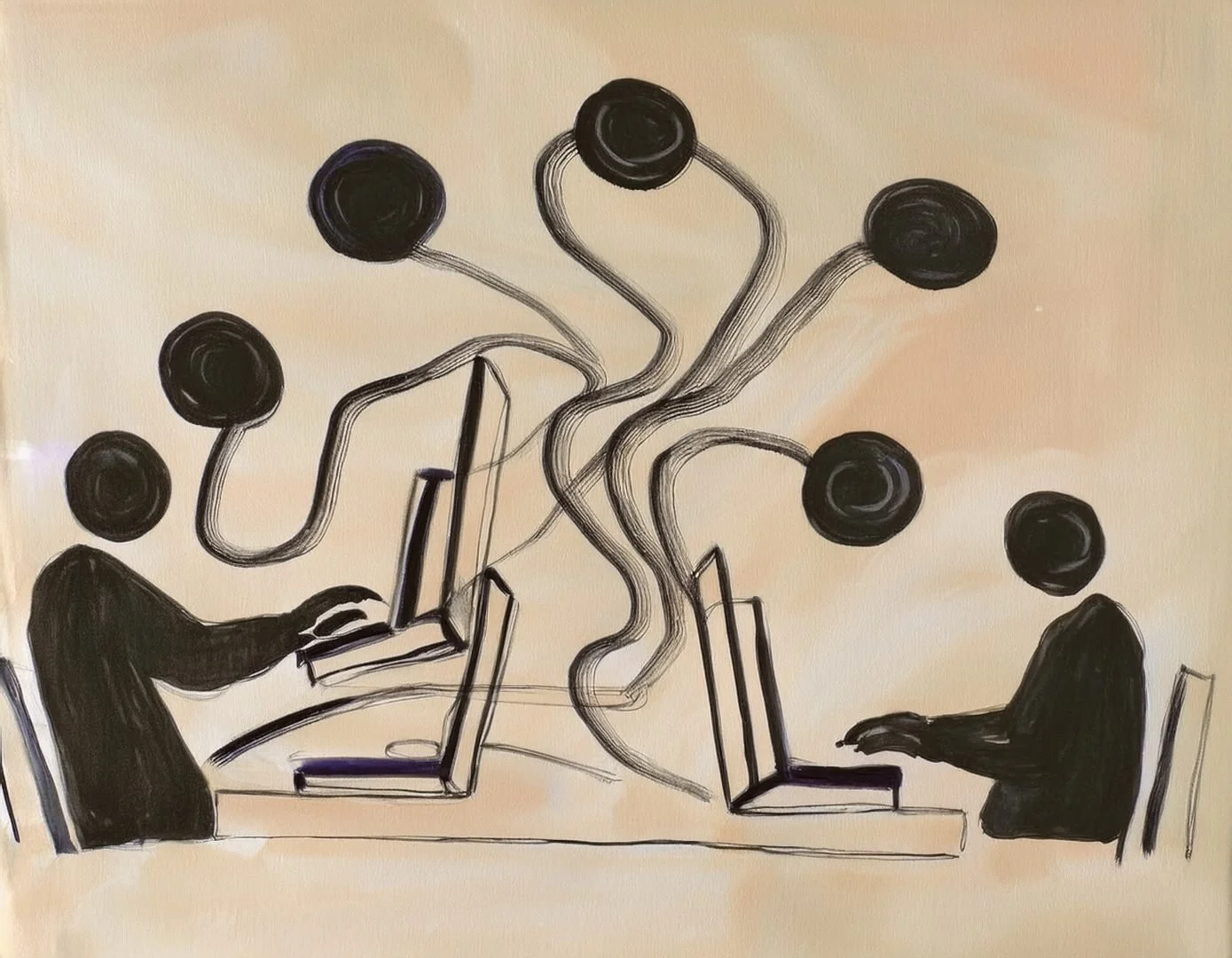
3. System literacy
Ask: How does this system behave by design?
AI systems:
predict likely patterns
optimise for objectives
do not understand meaning
do not care about truth unless designed to
They respond to pressure. If accuracy is rewarded → accuracy increases. If speed and engagement are rewarded → noise increases.
This helps avoid two mistakes:
anthropomorphising (“it thinks / wants”)
abdication (“the AI knows best”)

4. Incentive literacy
Ask: What behaviour is being rewarded here?
Many people blame “AI slop” on the technology.
More often, the cause is:
volume over care
speed over accuracy
engagement over integrity
A useful reframe:
If you don’t like the output, look for the incentive.
This keeps responsibility where it belongs.

5. Decision literacy
Ask: Is this shaping a decision, not just information?
AI increasingly:
ranks options
recommends actions
filters choices
nudges behaviour
Pause when:
“recommendation” becomes default
disagreement feels costly or impractical
oversight is symbolic rather than real
A key test:
Could I meaningfully say no here and would it matter?

6. Red-line literacy
Ask: What should never be handed over?
Some boundaries matter regardless of efficiency:
lethal decisions
loss of contestability
control over shared reality
systems that cannot be interrupted
Literacy is not just personal.
It’s civic.

7. Reflective literacy (the quiet one)
Ask: How is this changing me?
Notice:
when speed replaces reflection
when convenience replaces judgment
when delegation replaces responsibility
If a system saves time but erodes care, that cost matters even if it’s invisible.
What this guide is not
This is not:
“AI is bad”
“AI is good”
“Stop using technology”
It is an invitation to: stay awake inside powerful systems.
One sentence to carry with you
If you remember nothing else, remember this:
AI literacy is not about mastering tools, it’s about preserving judgment.
A final note
Every powerful medium in history went through a chaotic phase.
Some societies learned to see clearly.
Others chose panic, control, or cynicism.
The difference was never intelligence.
It was attention.
This guide exists to help keep that attention alive.